
Inviting someone into your home to work with your child can raise a lot of questions. What will they actually do? Do you need to prepare anything? Are you supposed to participate?
In-home ABA therapy brings support into the place where your child participates in everyday life, including playing, getting ready for school, and winding down at night. This guide explains how in-home ABA therapy works, what a typical session looks like, who’s involved, and how progress happens over time.
Advance to Thrive provides in-home ABA therapy in New Jersey that fits into real family life.
What Is In-Home ABA Therapy?
In-home ABA therapy is Applied Behavior Analysis provided in your child’s home instead of a clinic. ABA therapy uses evidence-based strategies to build useful skills, support independence, and reduce barriers that make everyday participation difficult for your child or children.
The home setting gives those skills somewhere real to be practiced. Your child can learn with support things like asking for help, moving through transitions, or completing routines in the places those things already happen.
What Actually Happens During an ABA Session?
An ABA session typically will not look like your child sitting at a table completing tasks for hours.
At Advance to Thrive, therapy may use play, your child’s interests, natural environment teaching, and other ABA strategies chosen around specific goals. The therapist comes in with a plan, but they also work with what real life brings that day.
An In-Home ABA session may include:
- Playing with preferred toys while practicing communication or turn-taking
- Working through a transition from one activity to another
- Practicing dressing, hygiene, toileting, or another daily living skill
- Supporting a real mealtime or homework routine
- Practicing ways to ask for a break, help, or something your child needs
Some days, the exact challenge your family has been talking about will happen while the therapist is there. This is where the intentional work of in-home ABA comes into play.
Instead of trying to explain the moment to your child’s therapist later, the team can see what led up to it, how your child responded, and what may help next time. Then, we are able to add this training to your care plan.
Who’s Involved in Your Child’s Care
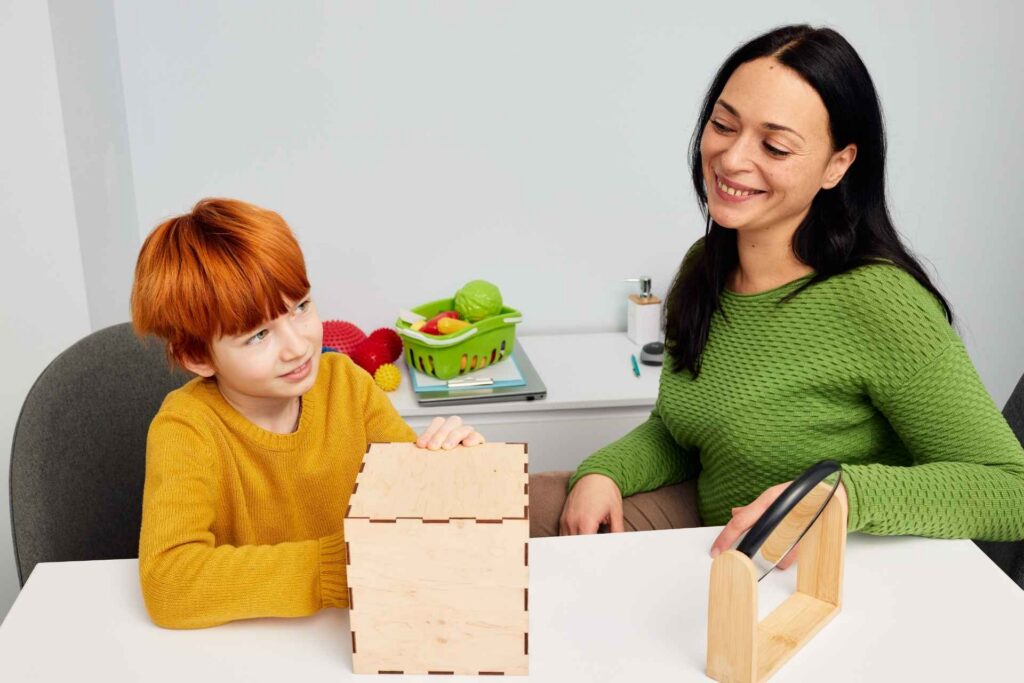
In-home ABA is a team effort, and everyone has a different role.
A Board Certified Behavior Analyst (BCBA) assesses your child’s needs, develops the treatment plan, sets measurable goals, and oversees care. A behavior technician or trained therapist may run many day-to-day sessions under supervision.
Your family is part of the team here, too.
Through caregiver and family support, you can learn why certain strategies are being used and how to carry them into the rest of the week. You are not expected to become your child’s therapist. The goal is to help you feel more prepared when a familiar challenge comes up.
When helpful, the team may also collaborate with teachers or other professionals involved in your child’s care.
How Progress Is Measured
ABA does not measure progress by whether a session looked “good” or followed a care plan, exactly. The team does set specific goals and tracks them over time.
However, progress may mean simply communicating a need more clearly, moving through a transition with less distress, completing more of a routine independently, or using a skill in a new setting.
It is also important to note that progress does not always happen in a straight line. One goal may click quickly while another needs more time or a different approach.
The BCBA reviews progress and adjusts the plan as your child grows. The plan should change with your child rather than expecting your child to keep fitting the same plan.
Getting Started With In-Home ABA
Getting started begins with a conversation about your child and what daily life looks like right now.
The next steps may include an assessment, goal setting, insurance verification, and scheduling services. Advance to Thrive works with most major insurance providers and handles benefit verification as part of getting started.
Frequently Asked Questions
Is in-home ABA therapy as effective as clinic-based therapy?
In-home ABA can be effective, but the right setting depends on your child’s needs and goals. Home-based care lets children practice skills inside the routines and environment where they will actually use them. Some children may benefit from support across more than one setting.
How many hours per week does in-home ABA usually involve?
There is no single number of hours that fits every child. The schedule depends on your child’s assessment, goals, level of support needed, family schedule, and insurance authorization.
Does my house need to be set up a certain way?
No. Your home does not need to look like a therapy space. In-home ABA is meant to work within real family life, and the team can suggest small changes if a specific goal would benefit from them.
Does insurance cover in-home ABA therapy in New Jersey?
Many insurance plans cover ABA when eligibility and medical-necessity requirements are met, but benefits differ by plan. Advance to Thrive can verify your benefits and explain what coverage may apply before services begin.
Helping Skills Become Part of Everyday Life
In-home ABA meets your child in a place they already know and gives new skills a chance to become part of everyday routines, from the beginning.
You do not have to have your home, schedule, or every difficult moment mapped out before starting. To explore options, give us a call. We will book a free consultation to discuss what your child needs, what your family is navigating, and what support could look like inside the life you already share.
Sources:
- Treatment and Intervention for Autism Spectrum Disorder – Centers for Disease Control and Prevention
- Parent-Mediated Therapy in Autism – Eunice Kennedy Shriver National Institute of Child Health and Human Development
- Caregiver Skills Training for Families of Children With Developmental Delays or Disabilities – World Health Organization


